About the tradition of Challenge Coins
Challenge Coins – is an international military tradition. It aims to express belonging to a unit, brotherhood, or event, as well as the formation of strong moral links among owners of Challenge Coins. Besides, they are used to admit someone`s achievements, devotion, or diligent service and act as a reminder of appreciation and respect among colleagues and commanders.
It is a common thing that you can see a beautiful collection of coins in bureaucrats` offices in countries where this tradition has taken root. This is a special place that highlights their path to becoming who they are now.
Below I will try to describe all aspects of this tradition.
How Challenge Coins Look Like
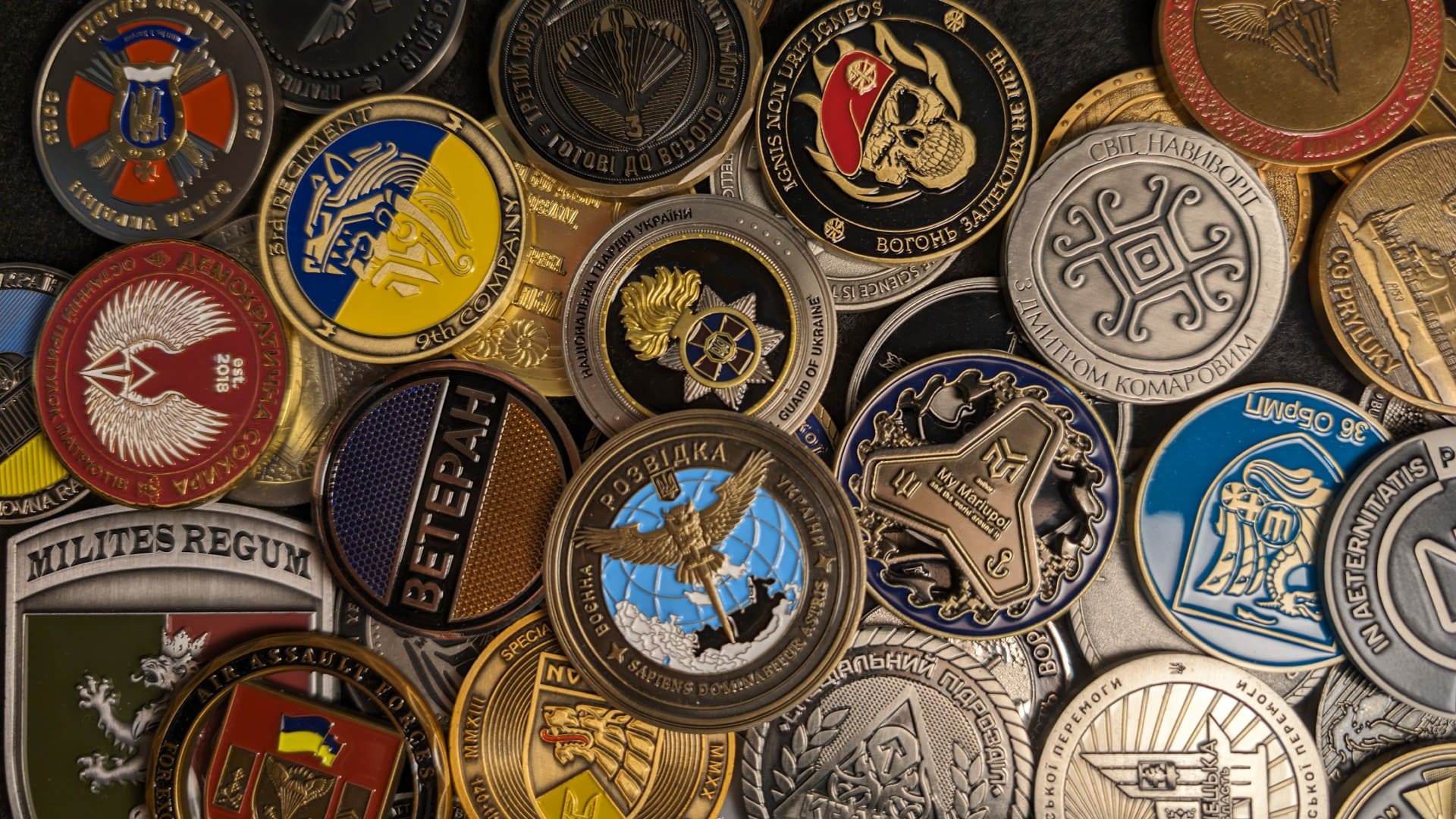
These are limited edition products made of metal (brass, copper, alloys) with emblems, symbols, and text referring to a unit or an event. These products may vary by shape and size, but usually they are round.
How Challenge Coins Are Awarded
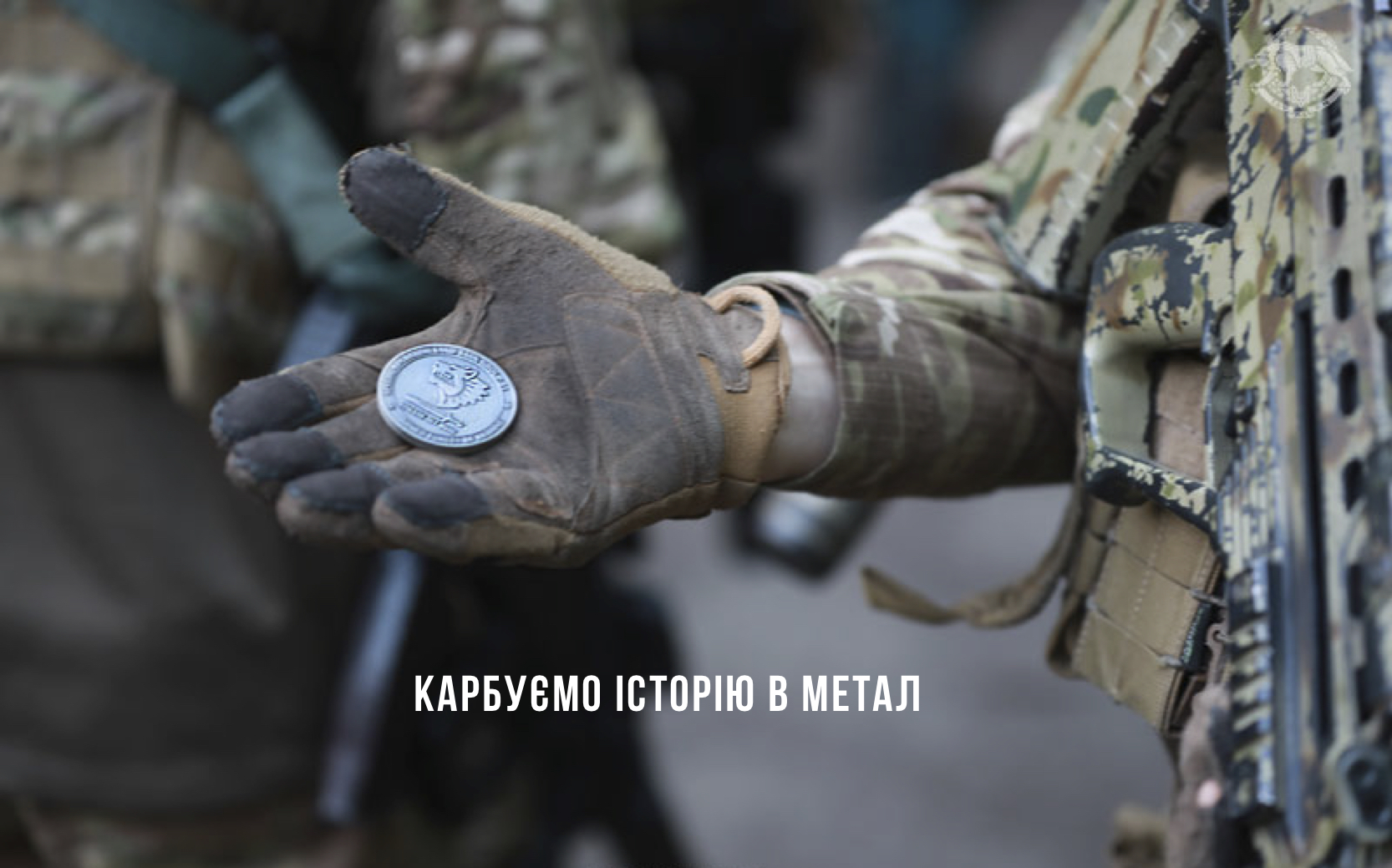
A coin is handed during the handshake under formal or informal circumstances. Sometimes the coins are awarded in a special packing according to the status of a ceremony.
The Status Of Challenge Coins
These coins are informal, though especially valuable from a moral point of view award since they indicate direct belonging to a unit. However, in some countries, they get a foothold within commanders` orders as a unit`s award.
The Development Of The Challenge Coins Tradition
Unfortunately, the development of this tradition always falls in the period of fighting. It is the war that fosters the spread of this tradition among almost all units since this period is characterized by the formation of the value of belonging to a certain community of people who constantly risk their lives. Owning a unit`s coin indicates that a person is a true member of a team and shares the same values and experience with their comrades, who have this coin.
The History Of The Challenge Coins Tradition Establishment
The tradition of “handing coins as an award” is more than 100 years old. The country of origin is the USA. The first official records date back to the years of WWI. However, there are confirmed historical facts that coins were awarded many centuries ago.
The Roman Empire
The soldiers who committed exceptional acts were awarded Roman coins with images of legions` coats of arms. They were handed as an additional payment.
WWI
Many American pilots volunteered to participate in the war. One of these volunteers was a rich officer who gave a medallion with an image of the unit`s symbols to each of his subordinates before departing to Europe.
During the fighting, the lieutenant`s plane was shot down over Germany. The pilot survived but was captured. They seized everything except for the medallion he carried in a bag on his neck. Later, he managed to escape from captivity. He decided to move towards the front, and in such a way managed to reach the French checkpoint. French soldiers suspected that the American was a German agent and wanted to execute him. But the lieutenant remembered that he carried an ultimate proof of his belonging on his neck. When the French saw the coin they recognized the symbols of the Union`s unit. This saved his life. When the lieutenant returned to the USA this story became widely known and contributed to the production of medallions among other units.
WWII
One of the famous stories about Challenge Coins usage during WWII concerns the Office of Strategic Services (OSS), a precursor of the present-day Central Intelligence Agency (CIA). OSS agents often acted behind the front line conducting secret tasks. To be able to identify other OSS agents, they carried coins with their unit emblem. These coins served not only as a means of identification but also strengthened the feeling of unity and belonging to agents who risked their lives for the sake of their mission.
Vietnam War
This was the period that breathed life into the Challenge Coins Tradition. The main aspect of this tradition was the usage of these coins as a means of moral support.
In war conditions, when soldiers regularly faced danger and stress, such small symbols as coins became a source of solidarity and a reminder of a common goal. This was the period when the tradition of coin check originated. Its essence lies in the fact that a serviceman could “challenge” other fellows by demonstrating his coin to them. Other fellows had to show their coins in return. The one who couldn`t do so usually had to buy drinks for all the guys with coins. If everyone demonstrated their coins, the one who initiated the challenge had to order drinks for all.
This game not only reflected mutual support and fellowship among servicemen but also helped keep the unit`s history and traditions. Besides, the Challenge Coins tradition served as a means of recognition of devotion and courage for military men in Vietnam, Officers and commanders could hand coins as an award for distinguished service or courage. As a result, their value and importance increased.
Ukraine.
In Ukraine, the first coins emerged as early as the beginning of the 90-s within the units that kept in touch with their foreign partners. Those were mostly the units that took part in peacekeeping missions from Ukraine. This category can also include representatives of special services who exchanged their experience with new partners, Being presented with coins, they had nothing to give in return except for charters and appreciation certificates. That`s why they produced their coins as well. However, this tradition hasn`t established a foothold among security forces.
My Own Story
I discovered the Challenge Coins tradition when I was studying at the US Special Operation Forces Center. This all happened under informal circumstances in the office of the head of the course. It was Friday and after a barbeque, the US mayor was excited to show the coins on his table. He was taking each coin in his hands and sharing his memories of how he got them. It was those stories that made a strong impression on me. It was like a presentation of the way of the warrior where words were backed by coins: West Point, passing Green Berets qualification, the first mission in Afghanistan, a coin from the President, participation in the “Iraqi Freedom” operation, advanced training courses… and those talks lasted for 2 hours.
…In 1 year I produced my first coin. It was dedicated to the Special Operations Forces of the Armed Forces of Ukraine. I started distributing them among colleagues explaining that this is a military tradition, and many people found it interesting. After my discharge, I was even more passionate about contributing to the development of the Challenge Coins tradition in Ukraine. In 2 years, during the interview for radio “Armia FM”, I pointed out: “I declare officially that the Challenge Coins tradition has worked out.”
Nowadays the tradition has reached its climax in Ukraine. Commanders and soldiers have understood its moral aspect – the importance of realizing belonging to brotherhood. Brigades, regiments. centers, battalions, and companies have their coins. Even some platoons order them. Military higher education establishments started awarding such coins to their graduates.
It is a great honor to get a coin from your direct commanding officer. This is proof that you are considered a part of your community. And finally, I`ll add that this is exactly what I have been dreaming of while listening to the American`s stories about the coins he received.
Sincerely, the founder of the “Alex Tymanov Group” veteran brand.
Alex Tymanov

P.S. With the development of this tradition, new companies specializing in the production of these coins on request began to appear in Ukraine. But the lion`s share of them is characterized by a very unhealthy trend– to sell units` coins. Focusing exclusively on the commercial production of coins participants of the market don`t realize that they are ruining the very essence of a coin as an award representing belonging. Such an attitude of producers towards the end consumer (receiver) is unacceptable. Who knows how the military brotherhood can react when it finds out that its coins are being unfairly sold to people who have nothing to do with the military field.

